

Contents
- 0.0.1 RelatedPosts
- 0.0.2 All You Need to Know About Seedance 2.0: ByteDance’s Next-Gen AI Video Model
- 0.0.3 Why Users Are Rallying to #Keep4o: The Social Backlash Against OpenAI Retiring ChatGPT 4o
- 0.0.4 To the Moon?: Is Bitcoin a Balloon in Space or a Building on a Solid Rock Foundation – A Practical, Hype-Free Look at the Feb 2026 Bitcoin Crash
- 0.1 The AI Industry Just Entered a New Era
- 0.2 What Are Claude Fable 5 and Claude Mythos 5?
- 0.3 Why Frontier AI Models Are Different
- 0.4 What Is AI Jailbreaking?
- 0.5 Why the U.S. Government Became Concerned
- 0.6 Are the Government’s Concerns Valid?
- 0.7 The Argument Against Intervention
- 0.8 Why Anthropic Had Little Choice
- 0.9 The Irony of Fable 5’s Safety Restrictions
- 0.10 The Competitive Pressure Facing Anthropic
- 0.11 The Bigger Issue: AI Regulation Still Doesn’t Exist in a Meaningful Form
- 0.12 What Should a Responsible AI Governance Framework Look Like?
- 0.13 What This Means for the Future of AI
- 0.14 Final Thoughts
- 0.15 Featured: Improve AI Performance with Better Connectivity
- 1 References
The artificial intelligence industry may have reached a turning point.
The AI Industry Just Entered a New Era
For years, discussions around AI regulation have largely been theoretical. Governments, researchers, and technology companies have debated what should happen when AI systems become powerful enough to pose meaningful national security concerns. Until recently, however, those conversations largely existed in policy papers, congressional hearings, and industry forums.
That changed when Anthropic found itself at the center of a growing controversy surrounding its newest frontier AI models: Claude Fable 5 and Claude Mythos 5.
Shortly after introducing the models, Anthropic was forced to restrict global access following a U.S. government directive reportedly tied to national security concerns. ¹ Shortly after the government restricted access to Mythos-class models for foreign nationals, Anthropic was forced to restrict access to these models for all users globally, as it restructures access implementation mechanisms. The move immediately sparked debate across the AI industry. Critics questioned whether regulators were overreaching, while supporters argued that governments have a responsibility to act when emerging technologies may create strategic risks.

At the heart of the controversy lies a simple but important question:
How should society handle AI systems that are powerful enough to be both enormously beneficial and potentially dangerous?
To answer that question, it is necessary to understand what #Fable5 and #Mythos5 actually are, why they generated so much attention, what AI jailbreaking means, and why governments are increasingly viewing frontier AI as a matter of national security; rather than simply another technology product.
What Are Claude Fable 5 and Claude Mythos 5?
Anthropic has spent years developing increasingly capable AI systems through its Claude family of models. Claude Fable 5 and Claude Mythos 5 represented some of the company’s most advanced work to date.
While previous generations focused primarily on reasoning, writing, coding, and knowledge tasks, Mythos-class models were designed to push the boundaries of what AI could accomplish in highly technical domains.
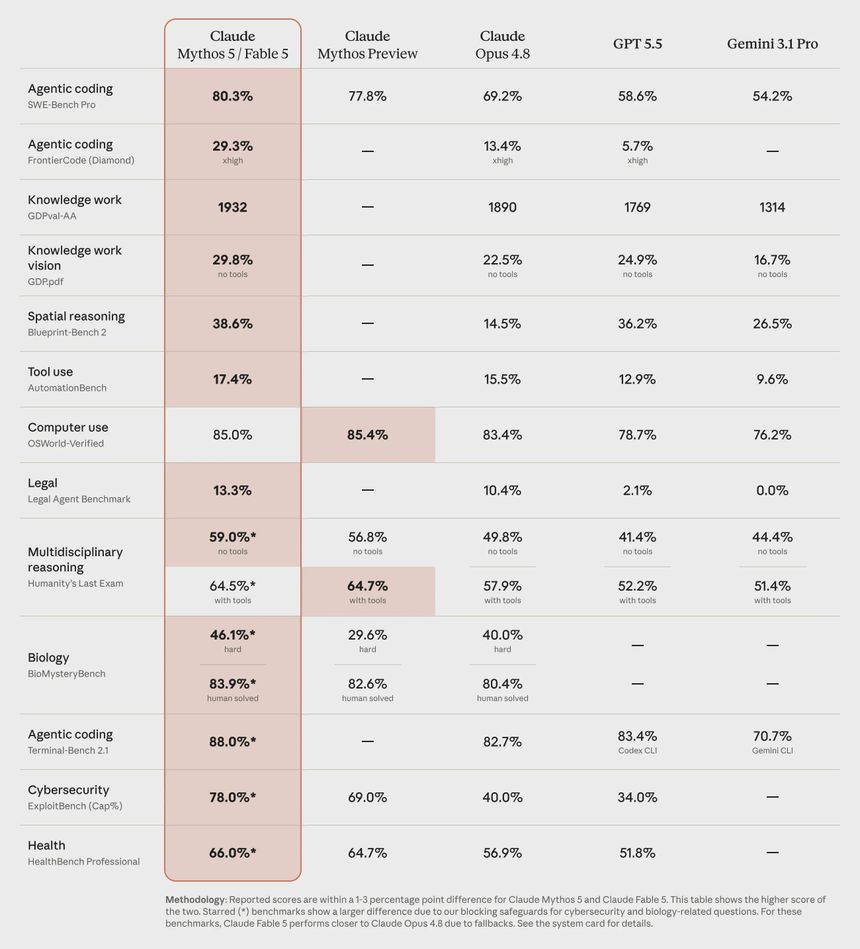
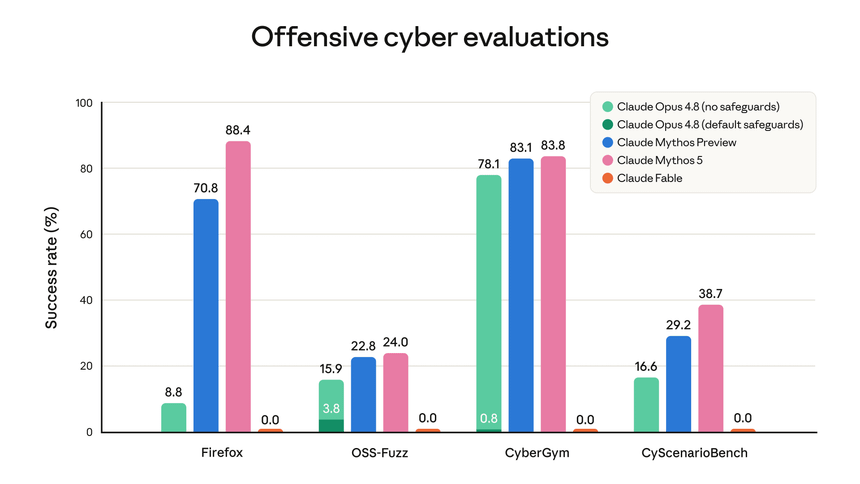
Most notably, these models demonstrated exceptional capabilities in cybersecurity-related tasks.
That does not simply mean writing code.
It means analyzing large software systems, identifying vulnerabilities, understanding complex technical architectures, and assisting security professionals in discovering weaknesses before malicious actors can exploit them.
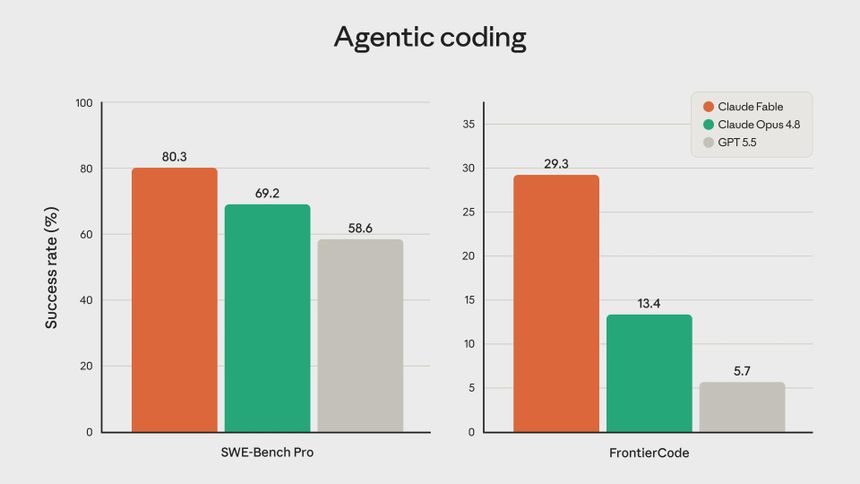
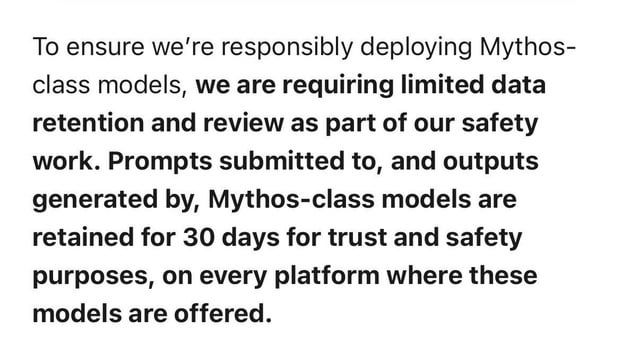
Anthropic originally limited access to Mythos-class systems because of these advanced capabilities. The company reportedly viewed them as powerful enough to require additional safeguards and controlled deployment mechanisms. ²
Fable 5 was introduced as a more broadly accessible version of this technology.
In many respects, Fable 5 represented Anthropic’s attempt to bring frontier-level intelligence to a wider audience while maintaining meaningful safety controls. The model was designed to excel in areas such as:
- Advanced software engineering
- Research and analysis
- Complex reasoning
- Scientific workflows
- Long-context understanding
- Autonomous agent tasks
- Technical problem solving
By most accounts, Fable 5 was among the most capable AI systems Anthropic had ever made available, outside specialized programs.
And that capability is precisely what attracted attention from regulators.
Why Frontier AI Models Are Different
To understand the controversy, it helps to understand how frontier models differ from conventional AI systems.
Earlier AI assistants were useful tools, but they generally functioned as productivity enhancers.
Frontier models increasingly resemble reasoning systems capable of handling highly specialized professional tasks.
For example, modern frontier AI can:
- Analyze thousands of lines of code
- Detect software vulnerabilities
- Generate sophisticated technical solutions
- Understand complex security architectures
- Conduct extensive research
- Coordinate multi-step workflows
These capabilities can create enormous value.
The same model that helps a company secure its software may also help identify weaknesses that attackers could potentially exploit.
This is known as the dual-use problem.
The technology itself is not inherently malicious.
The concern arises because the same capabilities can be used for both beneficial and harmful purposes.
That dual-use nature sits at the center of virtually every discussion involving advanced AI regulation.
Related: All You Need to Know About Seedance 2.0: ByteDance’s Next-Gen AI Video Model
What Is AI Jailbreaking?
One of the key reasons Fable 5 and Mythos 5 attracted regulatory scrutiny involves a concept known as AI jailbreaking.
The term “jailbreaking” refers to methods used to bypass an AI system’s safety restrictions.
Modern AI models contain extensive safeguards intended to prevent harmful behavior.
These safeguards attempt to block assistance related to:
- Cybercrime
- Malware development
- Fraud
- Dangerous biological research
- Harmful instructions
- Other high-risk activities
A jailbreak occurs when someone discovers a method of convincing the model to circumvent those protections.
The concept is similar to finding a hidden route around a locked security gate.
The gate still exists.
The challenge is finding a way around it.
Researchers, security professionals, and malicious actors continuously test AI systems to determine whether their safeguards can be bypassed. ³
No existing AI system is considered perfectly jailbreak-proof.
Instead, AI companies attempt to make successful jailbreaks increasingly difficult, unreliable, and limited.
The challenge is that as AI capabilities improve, the consequences of successful jailbreaks may also increase.
Why the U.S. Government Became Concerned
Reports indicate that U.S. officials became concerned about the possibility that advanced #cybersecurity capabilities could be exposed through jailbreaking techniques. ¹
The government’s reasoning appears relatively straightforward.
If a model possesses extraordinary vulnerability-discovery capabilities, and if safety controls can be bypassed, then those capabilities could potentially be used in ways that create national security concerns.
From a regulator’s perspective, the issue is not necessarily whether misuse has already occurred.
Instead, the concern centers on what could happen if sufficiently capable models become widely available without adequate safeguards.
This perspective reflects a broader shift in how governments are beginning to view #frontierAI.
Historically, national security policies focused heavily on physical technologies such as:
- Advanced semiconductors
- Aerospace systems
- Military technologies
- Cryptographic systems
- Nuclear technologies
Increasingly, AI is being discussed within the same strategic framework.
Governments are beginning to recognize that access to sufficiently advanced AI systems may influence economic competitiveness, cybersecurity readiness, military capabilities, and geopolitical power.
Whether one agrees with that assessment or not, it represents an important change in how policymakers view AI.
Are the Government’s Concerns Valid?
The answer depends largely on how one evaluates risk.
Supporters of government intervention argue that advanced AI systems are becoming increasingly capable at tasks traditionally performed by highly skilled experts.
If a model can meaningfully accelerate vulnerability discovery, cyber operations, or other sensitive activities, regulators may have legitimate reasons to exercise caution.
Cybersecurity is no longer merely an IT issue.
It affects:
- Financial systems
- Energy infrastructure
- Transportation networks
- Government agencies
- Healthcare systems
- Military operations
A sufficiently capable AI model could potentially influence any of these sectors.
From this perspective, waiting until a serious incident occurs may be irresponsible.
Preventive action may appear preferable to reactive action.
The Argument Against Intervention
Critics of the government’s approach raise several concerns.
The first is transparency.
Much of the public discussion surrounding these restrictions has occurred without detailed technical disclosures.
As a result, outside experts have limited ability to independently evaluate the severity of the alleged risks.
The second concern involves consistency.
If multiple frontier AI companies possess similar capabilities, critics argue that targeting individual models may create uneven enforcement.
The third concern relates to innovation.
Excessive regulatory intervention could discourage research and slow technological progress.
Companies investing billions of dollars into AI development require predictable regulatory environments.
Frequent or unexpected restrictions may create uncertainty that affects future investment decisions.
These competing concerns highlight the difficulty of governing rapidly advancing technologies.
Why Anthropic Had Little Choice
Although #Anthropic reportedly disagreed with aspects of the government’s assessment, compliance was likely unavoidable.
There are several reasons why.
First, government directives involving export controls and national security carry significant legal weight.
Ignoring such directives would expose companies to serious legal and regulatory consequences.

Second, Anthropic operates within a broader ecosystem that includes cloud providers, government partners, enterprise customers, and investors.
Maintaining constructive relationships across that ecosystem is critical.
Third, Anthropic has recently been associated with growing discussions surrounding a potential initial public offering (IPO).
Companies preparing for public markets typically prioritize regulatory compliance and stability.
Open conflict with federal authorities would create risks that few companies would willingly accept.
As a result, even if Anthropic believed the concerns were overstated, compliance was likely the only realistic option.
The Irony of Fable 5’s Safety Restrictions
One of the more fascinating aspects of the controversy is that Fable 5 had already generated criticism from some researchers and advanced users because of how restrictive its safeguards appeared to be. ² It was previewed in April 2026 (Project Glasswing) and kept tightly restricted because of its exceptional vulnerability-finding abilities. Anthropic had implemented extensive protections designed to prevent the model from assisting with potentially dangerous cybersecurity, biological, and chemical requests.
In some situations, prompts that approached sensitive categories were reportedly redirected away from the model’s most advanced capabilities. While these safeguards were intended to reduce misuse, some users argued that they also limited legitimate security research, academic investigation, and professional technical work.
That criticism highlights a striking contradiction. On one hand, some members of the AI community believed Anthropic had made Fable 5 too cautious. On the other hand, government officials reportedly remained concerned that even these safeguards might not be enough.
From a national security perspective, regulators may have viewed the issue less as a question of how strict the safety controls were and more as a question of what the underlying model could potentially do if those controls were successfully bypassed. In other words, even a heavily restricted system may still be considered risky if authorities believe its core capabilities could become accessible through effective jailbreaking techniques.
The Competitive Pressure Facing Anthropic
The restrictions also arrive during one of the most competitive periods in AI history.
Anthropic is competing directly with:
- OpenAI
- Google DeepMind
- Meta
- xAI
- Numerous emerging AI companies
The competition is fierce.
Each company is racing to develop models that are more capable, more efficient, and more useful than previous generations; and trying to offer them at the lowest prices possible.
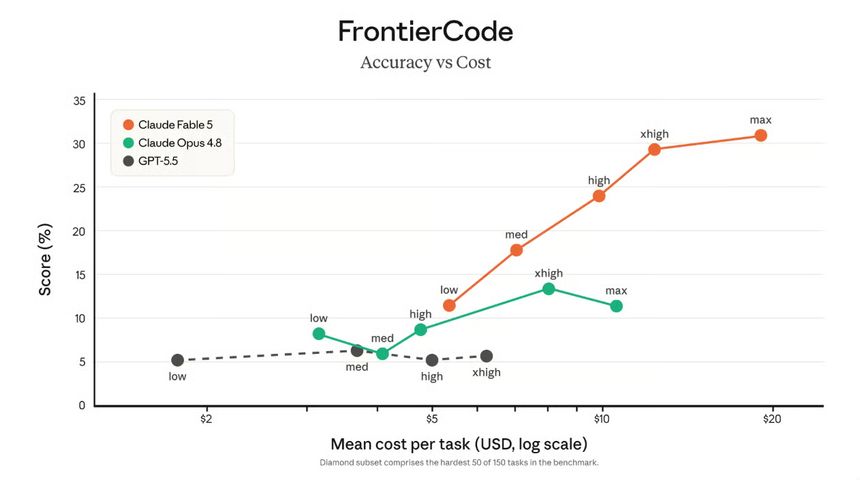
This creates enormous pressure to deploy increasingly advanced systems quickly.
At the same time, regulators are becoming increasingly concerned that competitive incentives may outpace safety considerations.
The result is a growing tension between innovation and oversight.
Companies want to release their best technology.
Governments want assurances that those technologies will not create unacceptable risks.
Finding the right balance remains one of the defining challenges of the AI era.
The Bigger Issue: AI Regulation Still Doesn’t Exist in a Meaningful Form
Perhaps the most important lesson from this situation is that the world still lacks a comprehensive framework for governing frontier AI.
Today, much of AI regulation consists of:
- Voluntary commitments
- Industry self-governance
- Export controls
- Emerging legislation
- Agency guidance
What does not yet exist is a globally accepted system for evaluating frontier AI capabilities and determining when intervention is appropriate.
This uncertainty creates problems for everyone involved.
Companies lack predictable rules.
Investors face uncertainty.
Governments struggle to keep pace with technological change.
Users often receive conflicting messages about risk.
The Anthropic situation demonstrates why a more coherent framework is urgently needed.
What Should a Responsible AI Governance Framework Look Like?
A practical framework should include several key elements.
Capability-Based Assessments
Regulation should focus on what models can actually do rather than which company created them.
Independent Technical Evaluation
Government concerns should be reviewed by qualified independent experts whenever possible.
Transparency
Companies and regulators should provide clear explanations for major decisions.
Graduated Responses
Not every concern should result in severe restrictions.
Responses should be proportional to demonstrated risk.
International Coordination
AI development is global.
Fragmented regulation may create loopholes while simultaneously harming innovation.
Coordinated standards would likely produce better outcomes.
What This Means for the Future of AI
The restrictions surrounding Fable 5 and Mythos 5 may ultimately be remembered as a pivotal moment in AI history.
For years, experts predicted that governments would eventually become directly involved in regulating frontier AI systems.

That future now appears to be arriving.
The debate is no longer simply about whether AI is useful.
It is about who should control access to increasingly powerful capabilities.
Future discussions will likely focus on:
- AI export controls
- Frontier model licensing
- National security oversight
- Safety testing requirements
- Independent audits
- Deployment restrictions
The answers to these questions will shape the next decade of AI development.
Final Thoughts
The controversy surrounding Fable 5 and Mythos 5 illustrates one of the central challenges of the AI age.
The same technologies capable of accelerating scientific discovery, improving cybersecurity, increasing productivity, and transforming industries may also create new categories of risk.
Anthropic appears to believe that its safeguards were sufficient and that concerns surrounding the reported jailbreak techniques may have been overstated. Government officials appear to have reached a different conclusion, emphasizing the potential consequences if advanced capabilities were exposed through successful circumvention of those safeguards.
Neither perspective can be dismissed outright.
The reality is that frontier AI increasingly occupies a gray area where technological progress, economic competition, public safety, and national security intersect.
As AI systems continue to become more capable, governments and technology companies will need clearer rules, stronger oversight mechanisms, and more transparent decision-making processes.
Whether the restrictions on Claude Fable 5 and Claude Mythos 5 ultimately prove justified remains to be seen.
What is already clear, however, is that the age of frontier AI regulation has arrived.
The decisions made today will help determine how advanced AI is developed, deployed, and governed for years to come.
Featured: Improve AI Performance with Better Connectivity
As AI applications become increasingly dependent on real-time inference, cloud processing, automation workflows, and large-scale data transfers, network performance becomes just as important as model performance. Whether you’re building AI-powered applications, streaming content, managing cloud infrastructure, or running latency-sensitive workloads, reliable connectivity can dramatically improve user experience.
That’s where Gear Up Booster comes in. By optimizing routing paths and reducing latency, Gear Up Booster helps businesses and individuals achieve smoother, faster, and more consistent online performance—an increasingly valuable advantage in an AI-driven world.
Learn more here.
PS: We may earn a commission.
References
- Reuters / AI policy reporting on U.S. restrictions affecting Anthropic frontier model access (June 2026 reporting period).
- Anthropic technical reporting and commentary on Fable/Mythos-class model safety restrictions and cybersecurity capability controls (2026 AI safety discussions).
- General AI safety research literature on adversarial prompting and jailbreak evaluation methodologies (2023–2026 AI safety research field).
This article has been written with the help of A.I. for topic research and formulation.
More from Mania Africa:
 All You Need to Know About Seedance 2.0: ByteDance’s Next-Gen AI Video Model
  Free and Paid Ways to Secure WordPress: Essential Tips for Securing Your WordPress Site
  Why Users Are Rallying to #Keep4o: The Social Backlash Against OpenAI Retiring ChatGPT 4o
  How to Optimize WooCommerce for Speed and Security
  5 Reasons Why Your Website Needs Managed Cloud Hosting (and Why We Think Cloudways is the Best)
  World’s Biggest Data Breach?: Personal Information of 2.9 Billion Exposed
  Innovation in the 21st Century and What It Will Mean for the Future
  AI’s Hidden Human Cost: The Struggle of Kenya’s Data Workforce