
Contents
- 0.1 RelatedPosts
- 0.2 Why Users Are Rallying to #Keep4o: The Social Backlash Against OpenAI Retiring ChatGPT 4o
- 0.3 To the Moon?: Is Bitcoin a Balloon in Space or a Building on a Solid Rock Foundation – A Practical, Hype-Free Look at the Feb 2026 Bitcoin Crash
- 0.4 Preventing AI Chat Data Theft: Enhancing Security Against Malicious Chrome Extensions & How to Protect Your Privacy
- 1 Everything You Need to Know About ByteDance’s Viral AI Video Generator: Key Capabilities of Seedance 2.0
- 2 How Seedance 2.0 Compares to Other Video Models
- 3 SeeDance 2.0 Training, Compute and Costs
- 4 Chinese AI Ecosystem and Government Support for AI StartUps
- 5 The Global Future of Artificial Intelligence: Geopolitics, Chips, and Trade Tensions
- 6 China vs. South Korea vs. Japan vs. the U.S.: Different Tech and AI Development Paths
- 7 Why Chinese AI Models Succeed Despite Development Necessitating Older or “Inferior” Tech
- 8 Final Thoughts: What the U.S. Can Learn from China’s Approach to AI Development
- 9 References
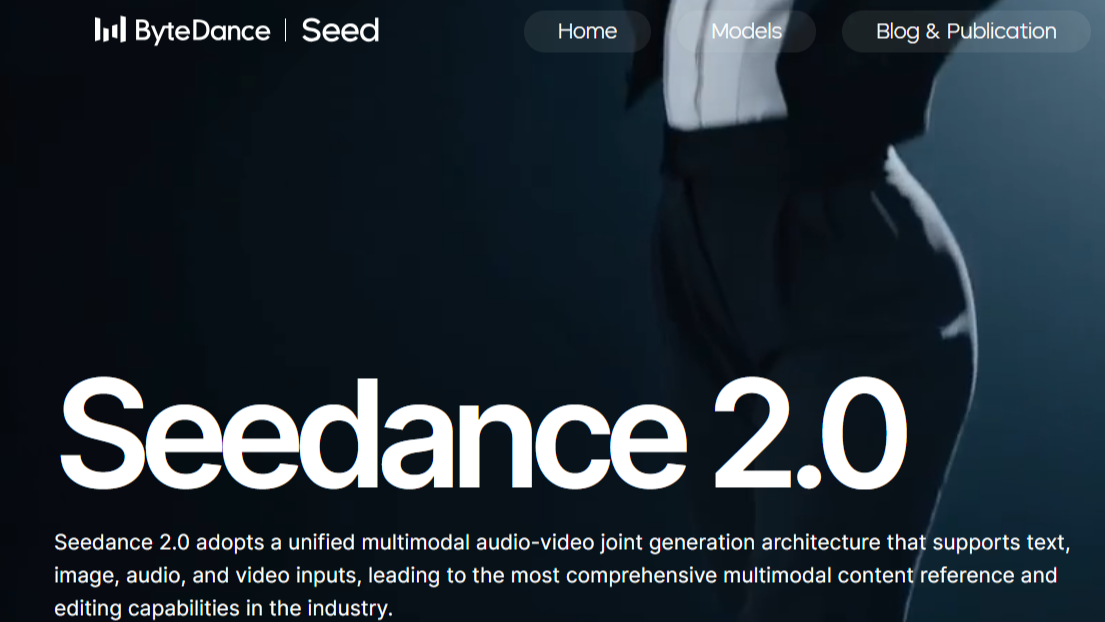
Seedance 2.0 is the latest AI-driven video generation model from ByteDance (the company behind TikTok/Douyin). Launched in February 2026, it can turn text descriptions (prompts) and multimedia inputs into short, cinematic video clips. Unlike earlier models that only used text or images, Seedance 2.0 is quad-modal – it accepts text, multiple images, reference videos, and even audio inputs simultaneously. This allows users to exercise “director-style” control over the output.
For example, a user can “@-mention” an uploaded video to copy its camera movement, specify an image for character appearance, add a soundtrack, and describe the action in text – all in one prompt 1,2.
Seedance 2.0 acts like an automated storyboard artist and cameraman
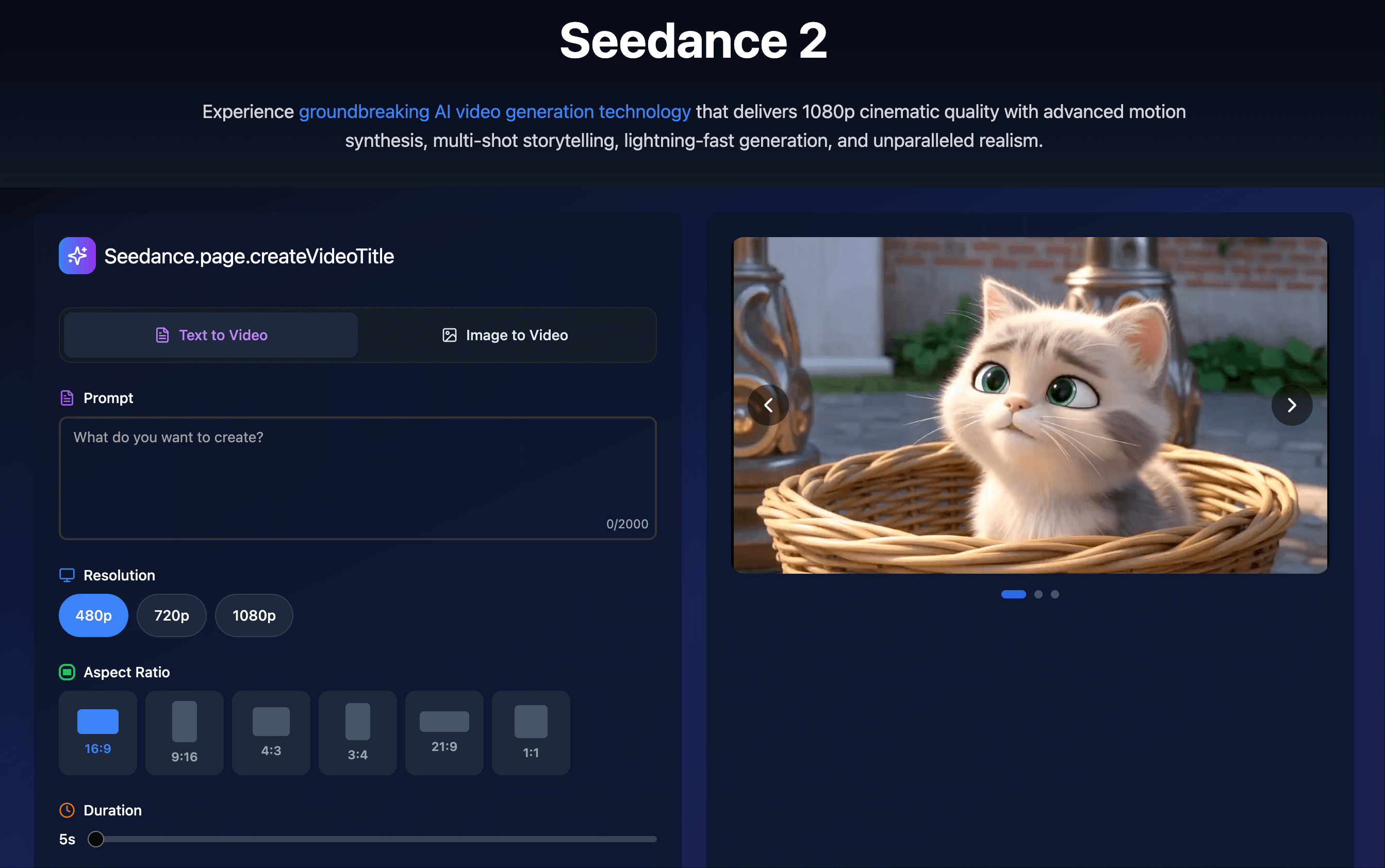
The system supports up to 12 input assets per generation (for instance, 9 images, 3 short video clips, and 3 audio files) and produces 4-15 second 1080p videos 1,3. In practice, this means users can create multi-scene clips (up to ~20 seconds) with consistent characters, cinematic motion, and synchronized audio.
Everything You Need to Know About ByteDance’s Viral AI Video Generator: Key Capabilities of Seedance 2.0
Key capabilities of Seedance 2.0 include enhanced motion realism and physics. According to ByteDance and industry analyses, Seedance 2.0 was trained with physics-aware objectives so that objects obey gravity, fabrics drape correctly, and liquids behave like fluids 4.
In other words, motions look much more natural than before. SitePoint notes that early videos shown by ByteDance exhibit convincing camera tracking, collisions, and fluid physics. This high temporal fidelity is crucial for usability: an ad video with unnatural motion would damage credibility, so Seedance 2.0‘s improved physics makes it production-ready 4. The model can maintain a consistent scene for up to ~20 seconds of video, a big jump from about 5-8 seconds in earlier versions 5.
Seedance 2.0 also uses advanced diffusion-transformer architecture. It essentially has two “brains”: one branch generates the visuals, the other generates native audio (including synchronized speech and effects).
In technical terms, it’s a dual-branch diffusion transformer – one transformer network for video frames, another for sound, trained together so that every footstep and voice line matches the action 6,7.
This tight audio-video coupling (with multi-lingual lip-sync) is unique compared to most other models, which generate video then add audio separately.
In practice, creators can drag-and-drop style references or motion clips and have #Seedance mimic them precisely. Users have noted that prompts like “make the camera dollie left and have [this image] run” reliably follow those instructions. This reference-based control – explicitly tying assets to parts of the prompt – eliminates much of the guesswork in AI video: Seedance 2.0 acts like an automated storyboard artist and cameraman 8,9.
Key Capabilities of SeeDance 2.0 Summarized
Below are some key features of Seedance 2.0, summarized from ByteDance and independent reports:
- Multi-Modal Inputs: Supports text + up to 12 media files (images, videos, audio). Users @mention images for style/appearance, videos for motion/camera moves, and audio for soundtrack or voice 1,2,4.
- Physics & Motion Realism: Improved temporal modeling ensures believable physics (gravity, fluid, etc.) and stable character/object consistency 4. Early demos show hair, fabrics, and water behaving naturally.
- Camera & Storyboarding: The model plans multi-shot scenes. It can break a prompt into a sequence of camera shots (like a director), generating continuous scenes up to ~20s 5,10.
- Synchronized Audio: Generates native sound (music, effects, dialogue) alongside video. Lip-sync works across languages, and audio beats can align with visual cuts 11,12.
- Editing & Extensibility: It can extend or edit existing videos. For instance, a user can give a clip and have #Seedance2 continue it seamlessly. It can also swap characters or apply new effects without regenerating from scratch 13,14.
- Ease of Control: The interface allows pointing to specific assets for direct control (rather than magical text prompts). This vastly reduces “prompt engineering” since creators explicitly guide each element 15,14.
Seedance 2.0’s combination of these features – long coherent video, physics, tight audio sync, and rich input control – makes it one of the most powerful AI video tools yet. It outputs 1080p video (also other aspect ratios) suitable for commercial use, and does not forcibly watermark or limit content.
SeeDance 2.0 is initially targeted at professional users (creators, marketers, filmmakers) via ByteDance’s Jimeng platform in China. Beta access has rolled out to select paying users in China, while savvy international users can access it through certain third-party apps (e.g. ChatCut) that integrate ByteDance’s API 16. A full global rollout is expected soon (industry sources say around Feb 24, 2026) 17.
In summary, Seedance 2.0 represents a major leap in AI video: it is designed to give everyday creators “director”-level control, producing high-quality, movie-like AI videos from simple multimodal prompts 1,4.
How Seedance 2.0 Compares to Other Video Models
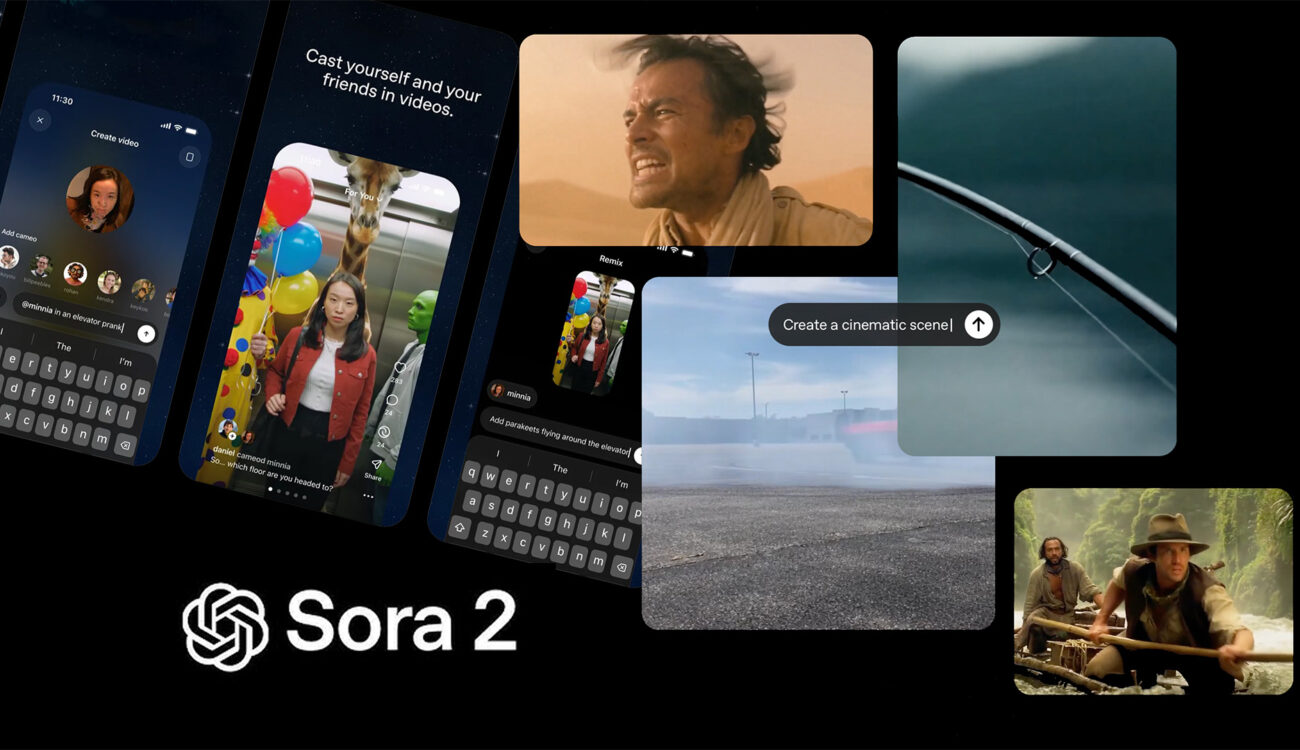
Seedance 2.0 enters an #AIvideo landscape that includes models from US and Chinese firms. For context: OpenAI’s Sora 2, Google’s Veo 3.x, Runway’s Gen-4, and others (like Kuaishou’s Kling) are leading contenders.
Each has strengths. OpenAI Sora 2 is often cited as state-of-the-art for realism (it was marketed as a “reality simulator”) but it has been less accessible and may not support reference videos.
Google’s Veo 3.x excels at fine-grained editing through a Mask tool, but its outputs can be inconsistent, and it primarily lives behind Google’s cloud APIs.

Runway Gen-4 is easy to use but currently lags in raw output quality. China’s Kuaishou Kling video model has shown strong continuity and detail on benchmarks, but it too has limited public access.
Industry analysts note that Seedance 2.0 holds its own or even leads on many fronts. In early comparisons, Seedance’s motion realism is on par with Sora 2 – it does not embarrassingly defy physics and keeps characters consistent. In fact, one technical author observed that Seedance “appears to match or exceed Sora on motion realism” while offering much better user accessibility (thanks to open inputs and web interface) and likely lower run costs 18,19.
The main weakness is purely ecosystem-related: unlike Runway models, Seedance 2.0 doesn’t (yet) have a slick web editing “canvas” for re-using assets, and it’s not natively on Google’s Vertex cloud. But for raw generation quality, it is competitive.
The result of this competition is better outcomes for users. With multiple models vying for leadership, prices and barriers fall. Analysts argue that competition will “drive down prices and quality thresholds,” plus reduce lock-in – creators won’t be stuck with just one company’s tech 20.
For example, if one model fails to render a certain effect well, another might succeed. Having Seedance 2.0 available means more choices for filmmakers and advertisers.
Long story short, early evidence shows Seedance 2.0 is among the top-tier video models worldwide, and especially distinctive for its multimodal flexibility and content quality 18,4.
SeeDance 2.0 Training, Compute and Costs
A key question is: how are these models trained and at what cost? Training a cutting-edge AI model requires massive compute (thousands of GPUs for weeks). ByteDance has not disclosed exact figures, but we can infer from what’s known about similar models. Chinese firms have managed to train large models on surprisingly modest budgets.
For instance, an open-source Chinese AI lab, DeepSeek, revealed its flagship LLM (the “R1” model) cost only ~$294,000 to train, using a cluster of 512 Nvidia H800 GPUs 21. Some analysts estimated its compute was worth ~$6 million – still tiny compared to the $100M+ it takes to train models like GPT-4 22.
Related: Why Users Are Rallying to #Keep4o: The Social Backlash Against OpenAI Retiring ChatGPT 4o
The reason DeepSeek (and others like Kimi, Minimax, Zhipu) achieved this was by clever efficiency: using older-gen chips (like H800 instead of the top H100/H200), optimizing code, shrinking batch sizes, and training for fewer steps. The result: Chinese open models that nearly match closed Western models on benchmarks, at a fraction of the cost 22,21.

Seedance 2.0, being a video-and-audio model, likely needed even more compute than a text-only model. Generating video is far heavier than text. If Seedance 2.0 is similar in size to other modern video diffusion models, it may have involved thousands of GPU-years.
ByteDance has huge resources – TikTok alone reportedly uses thousands of servers – and ByteDance is now investing heavily in AI infrastructure (even reportedly developing its own chips 22).
Still, Chinese firms often rely on scaled-down training runs and distilled training (transferring knowledge from existing models) to cut costs. The bottom line: while companies like OpenAI burn tens of millions (or even billions) to train GPT-4, Chinese labs have demonstrated they can close performance gaps by training more frugally 21,22.
Inference (usage) costs are also relevant. Because many Chinese models are released open-weight, anyone can run them on their own hardware. DeepSeek and others charged nothing for model access; users only pay for cloud compute as needed. The famous DeepSeek R1, after release, was estimated to cost 20-50× less to use than OpenAI’s equivalents 22.
Seedance 2.0 is not open-source, but if accessible via web apps, its usage cost will depend on ByteDance’s pricing.
In general, “inferior” or older GPUs can still run these models; customers might pay by the minute of output. The net effect is Chinese models that make high-end AI more affordable and widespread, by lowering both development and usage costs.
Chinese AI Ecosystem and Government Support for AI StartUps
Seedance 2.0’s development must be seen in the context of China’s AI ecosystem. The Chinese government has declared AI a national priority and is plowing enormous funding into the field. For example, China aims to build its AI industry into a $100-150 billion sector by 2030 24,25.
To achieve this, Beijing mobilizes “full-stack” industrial policy: state funds, national labs, and subsidies are directed at everything from chips to software. In 2020 China launched an $8.2 billion national AI fund for startups 26 and local governments across Shanghai, Shenzhen, and other tech hubs.
The Chinese government also set up #AI labs and “pilot zones” to incubate companies 26. They are even creating a National Integrated Computing Network to pool vast data-center resources for training models 26. These measures – along with ease of market access in China – give Chinese AI companies powerful tailwinds.
ByteDance itself is believed to spend tens of billions of yuan on AI research each year (Reuters sources say its 2026 AI procurement budget may exceed ¥160 billion, about $22B) 23.
By contrast, the U.S. approach relies more on private innovation and venture capital. The U.S. government does fund AI research (through agencies like NSF, DARPA, and new National AI Initiative programs), but a larger share of funding comes from the private sector.
U.S. tech giants (Google, OpenAI/Microsoft, Meta, etc.) invest record sums in AI computing. For perspective, one analysis notes that even after China’s massive efforts, its private AI investment is smaller than that in the U.S.: e.g. OpenAI’s recent $100-500 billion funding round dwarfs any single Chinese deal 27.
In other words, Chinese firms enjoy state-backed benefits (subsidies, guaranteed cloud), while U.S. firms leverage abundant VC (Venture Capital) and corporate R&D budgets. Both ecosystems are highly advanced, but they take different paths: China’s is top-down and coordinated, whereas America’s is bottom-up and market-driven.
The Global Future of Artificial Intelligence: Geopolitics, Chips, and Trade Tensions
The U.S.-China tech rivalry critically affects AI through export controls on semiconductors. High-end AI training requires the latest GPUs (like Nvidia’s H200 and upcoming H100 successors).
The U.S. and its allies have banned sales of those cutting-edge chips and chip-making equipment to China. Officially, this should hamper China’s AI progress. In practice, however, Chinese companies have found workarounds.
A Reuters report (Nov 2025) revealed that Alibaba, ByteDance and others are training new models offshore in Southeast Asia to get around U.S. restrictions 28.
Moreover, there have also been a number of high-profile breaches. For instance, TSMC (Taiwan) accidentally supplied Huawei with millions of advanced chip wafers through a shell company, giving China computing power equivalent to about one million Nvidia H100 chips 29. Those chips are somewhat outdated (by about 3-4 years), but they still represent a huge compute infusion. In short, while export controls have slowed China’s AI growth, they have not completely blocked it 30,28.
Chinese firms have also pursued domestic solutions. Huawei produces Ascend AI chips (albeit behind Nvidia’s cutting edge), and ByteDance is now developing its own AI chip, reportedly aiming to roll out samples in early 2026 23.
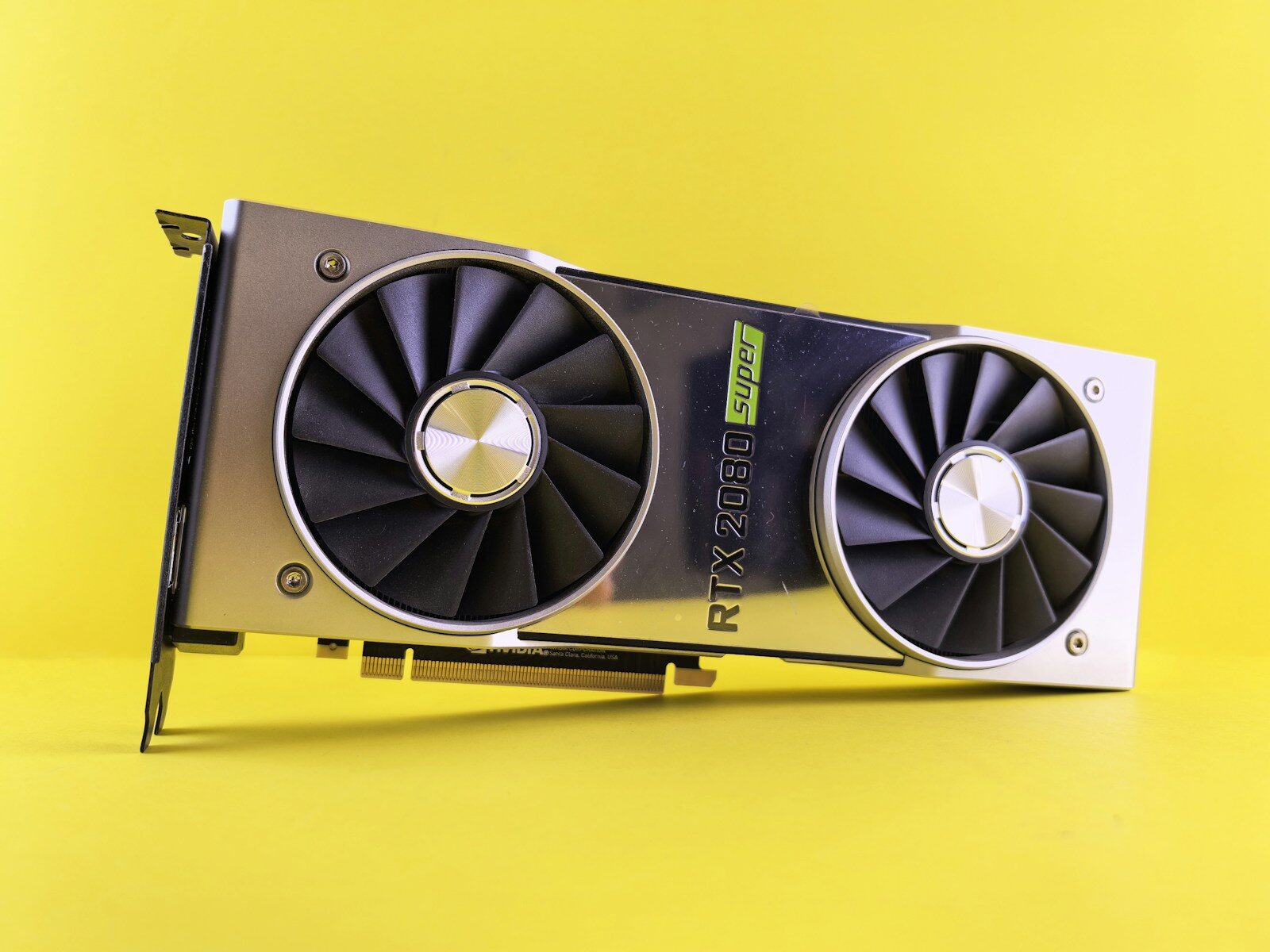
South Korea and Taiwan have been building fabs for Chinese customers, and China is boosting its own semiconductor industry (for instance, Japan’s Rapidus and China’s SMIC are working on advanced nodes).
Meanwhile, the U.S. and allies are pushing to onshore chip production and reinforce controls. The upshot for Seedance 2.0 is that while ByteDance may not have had the very latest Nvidia chips at its disposal, it can lease foreign data centers and invest in local chips to keep training powerful models 28,23.
For users, therefore, the geopolitical game means that there will likely always be some delay in Chinese access to the absolute bleeding edge hardware, but it doesn’t stop impressive progress.
China vs. South Korea vs. Japan vs. the U.S.: Different Tech and AI Development Paths
It’s instructive to compare China’s AI strategy with those of other Asian powers and the U.S. In China, the government-led model (with massive R&D grants and national programs) contrasts with how tech is funded in, say, Japan or South Korea. Both Japan and Korea have tech-savvy governments and heavy corporate players:
- South Korea: The government and chaebols (ultra-rich family owned businesses like Samsung, LG, Hyundai) are jointly pushing AI hardware. For example, Korea announced a W1 trillion (≈$688M) initiative (2026-2030) to develop domestic AI semiconductors for devices like smart robots and cars 31. This “M.AX Alliance” involves about 1,000 firms and labs (Samsung Electronics, Hyundai, LG, etc.) and aims to reduce dependence on foreign chips 32,33. Korea’s approach is highly collaborative: large conglomerates work with state funds and universities to build specialized chips and AI-driven manufacturing.
- Japan: Japan is doubling down on semiconductors and AI too. Recent government plans earmark about ¥10 trillion (≈$65B) in public funding for microchip and AI technology 34. Japanese firms already lead globally in some chip segments (like NAND flash and robotics). The country is leveraging its strengths in hardware – industrial robots and manufacturing equipment – to accelerate AI tech. For instance, Japan’s Rapidus (backed by government cash) partnered with IBM to make cutting-edge 2-nm chips for AI 34. And as an aging nation, Japan has embraced AI-powered automation widely, meaning industries there are very much eager adopters of domestic AI solutions 35.
- United States: The U.S. remains a leader in total compute power, AI chip design (Nvidia, AMD), cloud infrastructure, and venture capital. The policy focus is more on fostering innovation and maintaining open markets. Recent U.S. initiatives (like the National AI Initiative Act and CHIPS Act) inject billions into basic research and chip fabrication, but U.S. tech firms primarily drive commercialization. American universities also produce many AI patents. In terms of volume, China may file more AI-related papers and patents annually, but U.S. research papers still gather more citations and lead in core breakthroughs 36,37. The U.S. model (Silicon Valley startups, MIT/Stanford research, large tech firms) has enabled rapid breakthroughs, but it lacks China’s centralized planning.
So who has the edge?
Each approach to AI development and the facilitation of related tech has its advantages. China’s massive market, data access, and state backing mean companies like ByteDance can scale fast and attract top talent. Korea and Japan contribute leading hardware and rigorous engineering.
The U.S., on its part, excels at fundamental innovation, open collaboration, and has an enormous cloud and data center footprint (owning perhaps 70% of global top-of-the-line chips).
Many analysts affirm that the US still holds a lead in raw technology, largely due to that compute advantage 38. However, Chinese and Asian firms are catching up remarkably quickly, often lagging only a few months behind U.S. models by leveraging homegrown techniques and cheaper resources 22. The recent track record with DeepSeek, Alibaba’s Qwen, ByteDance’s Doubao/Seedance – shows that the US’s lead is not as unassailable as once thought. The global AI race is very much alive and multi-polar.
Why Chinese AI Models Succeed Despite Development Necessitating Older or “Inferior” Tech
A striking fact is that many top Chinese models were developed with hardware that would be considered “inferior” by U.S. standards. How did they do it? The reasons include:
- Efficiency and Open Research: Chinese teams have aggressively optimized #AItraining recipes and often release open-weight models. This means once trained, anyone can run them on ordinary hardware. Open models (like DeepSeek, Kimi, Minimax) have no usage fee beyond electricity and server costs 22. Efficiency gains (like pruning, quantization, or sparse MoE layers) let them squeeze more from each GPU.
- Adaptation and Distillation: There is evidence Chinese researchers sometimes use outputs from leading Western models (ChatGPT, GPT-4) as “pseudo-labels” to teach their own models, a form of knowledge distillation. While controversial, this could transfer some reasoning capability without retraining from scratch. The PIIE analysis notes that Chinese models claim to have shrunk the performance gap to “months rather than years” behind U.S. models 39.
- Lower Overhead Costs: The overall economics differ. Chinese companies often face lower data center and labor costs, and are boosted by massive government subsidies, so their effective “overhead” for building a model” is smaller. They can, therefore, experiment more with less risk. When DeepSeek announced R1’s rock-bottom training cost (~$300K) 21, it caused a shock on Wall Street – revealing how cheaply China can enter the high end.
- Scale of Deployment: Many Chinese models are quickly integrated into huge domestic platforms (like Douyin/TikTok, WeChat, etc.) with hundreds of millions of users. This built-in scale allows rapid feedback and iteration, giving Chinese teams real-world data to refine models cheaply. By contrast, some U.S. labs must spend on cloud credits to scale up usage.
Final Thoughts: What the U.S. Can Learn from China’s Approach to AI Development
In sum, Chinese AI companies are proving that brute force (or even throwing money at the problem) isn’t the only path. By being resourceful – using clever algorithms, open research, and leveraging local advantages – they achieve surprisingly good performance with “inferior” hardware.
Seedance 2.0 is part of this trend. It likely did not rely on proprietary GPU chips or billions of dollars; instead, ByteDance incrementally improved its diffusion-transformer design and perhaps used more modest GPU farms (or even new ByteDance chips in the future 23).
The result is a “lean and mean” development process. That said, such efficiency has limits: if U.S. chips become even more advanced (e.g. H200 or beyond), Chinese models will have to adapt further or find new optimizations. The race to get the most from every GPU continues for all players.
Watch a short-tutorial of how to get started with Seedance 2.0 on YouTube. Courtesy of Aizen on YT. You can also watch a Spiderman user-generated video (using Seedance 2.0) on Reddit.
For the average tech-interested user, the bottom line is that Seedance 2.0 is now one of the most advanced AI video generators available. It represents ByteDance’s push to compete globally in generative AI.
Users should know it offers unprecedented control (text+images+video+audio inputs) and produces high-quality, coherent clips with realistic physics. But it is currently accessible mainly to Chinese or specialized users via Jimeng/Doubao (and third-party apps).
In the broader picture, Seedance 2.0’s arrival underscores how quickly Chinese AI has progressed. Behind it, though, are massive R&D efforts, government support, and clever engineering under constraint.
While the U.S. ecosystem still leads in raw chip tech and AI compute power 38, this new generation of Chinese models shows the gap is narrowing. Geopolitical tensions (chip bans, trade) pose challenges, but Chinese firms are innovating around them and even building their own chips 29,23.
Meanwhile, other Asian powers like Korea and Japan continue to invest in semiconductor and AI hardware (e.g. Korea’s new AI chip projects 32, Japan’s $65B chip plan 34), creating a more multi-centric AI landscape. In other words, it’s not just the U.S. vs. China: global tech development involves many players with different strengths.
Summing up, Seedance 2.0 is a clear signal of China’s AI ambitions and capabilities. It shows that Chinese AI can produce “super impressive” outputs even without always having the absolute best hardware. For techies and non-techies alike, the takeaway is that AI video is rapidly advancing worldwide, and competition (and collaboration) between countries is fueling it. Watching how models like Seedance 2.0 evolve – and how their creators navigate chip shortages and funding – will give insight into the future of AI.
Read more AI News and Updates.
References
- Ravi Hari, “What is ByteDance’s Seedance 2.0? A Guide With Examples” (Mint News, Feb 2026)
- DeepLearning.AI, The Batch – Data Points: Seedance creates new movie-making interface (Feb 11, 2026)
- What is ByteDance’s Seedance 2.0? The cinematic AI video generator powered by text, image and audio inputs | Mint
- M. Harbottle, “Seedance 2.0: ByteDance’s New AI Video Model” (SitePoint developer blog)
- ByteDance Official Site – Seedance 2.0 (product page)
- Seedance 2.0: ByteDance’s New AI Video Model – Developer Guide & Comparison
- J. Ronson & L. Marsh, AI Voice & Video News (TechNode, Feb 2026)
- M. Demirer et al., How the AI Boom Shrugged off the DeepSeek Shock (PIIE, Jan 2026)
- Reuters, “China’s DeepSeek says R1 model cost just $294,000 to train” (Sep 18, 2025)
- Reuters, “China’s tech giants move Al model training overseas” (Nov 27, 2025)
- Reuters, “ByteDance developing AI chip, in talks with Samsung” (Feb 11, 2026)
- Chinese Artificial Intelligence and the Future of Technology and Trade | US China Dialogue
- Full Stack: China’s Evolving Industrial Policy for AI | RAND
- Korea JoongAng Daily, “Korea to launch W1 trillion project for AI semiconductor” (Feb 11, 2026)
- Bank of America Global Research, Japan Insights: AI and Semiconductor Growth (Mar 2025)
- Japan’s Technology Sector Drives AI and Semiconductor Growth
- The AI Market in China vs. USA: Growth, Investments, and Market Share | PatentPC
- ByteDance suspends Seedance 2.0 feature that turns facial photos into personal voices over potential risks – TechNode
- Data Points: Seedance creates new movie-making interface (deeplearning.ai)
- What Is Seedance 2.0? A Guide With Examples | DataCamp
- Seedance 2.0 (seed.bytedance.com)
This article has been written with the help of A.I. for topic research and formulation.
More from Mania Africa:
 Apple Launches In-House Produced M1 Chip
  Why Users Are Rallying to #Keep4o: The Social Backlash Against OpenAI Retiring ChatGPT 4o
  How Safe Are Your Secrets on TikTok? Examining the Connection between ByteDance, China, Social Media, and U.S. National Security
  Unveiling TikTok’s Alleged Anti-Trump Censorship – What Users Need to Know
  US Supreme Court Upholds TikTok Ban Citing National Security Concerns
  Inside Apple’s ‘It’s Glowtime’ 2024 Event: New iPhone 16, Apple Watch Series 10, and AirPods 4 Announced
  How to Loop a Video on YouTube: Step-by-Step Guide for PC, Mac, Android, and iPhone
  Apple’s WWDC 2022 Highlights: iOS 16, New M2 Chip, New M2 MacBook Air, Multi-Display Apple Carplay, and WatchOS 9