


Contents
- 0.1 RelatedPosts
- 0.2 All You Need to Know About Seedance 2.0: ByteDance’s Next-Gen AI Video Model
- 0.3 Why Users Are Rallying to #Keep4o: The Social Backlash Against OpenAI Retiring ChatGPT 4o
- 0.4 Preventing AI Chat Data Theft: Enhancing Security Against Malicious Chrome Extensions & How to Protect Your Privacy
- 1 Why Bitcoin is so jumpy (a two-part explanation: structure + psychology)
- 2 The “balloon in space” metaphor — useful or alarmist?
- 3 The 4-year Cycle: Bitcoin halving, hype, and reality
- 4 Cryptocurrencies’ Regulation: the double-edged sword
- 5 Potential Security Risk: is quantum computing an existential threat to Bitcoin and Blockchain Authentication?
- 6 Why the Feb 6 Bitcoin Crash likely happened — A deeper dive into the Challenges Facing Cryptocurrencies in Early 2026
- 7 A Historical Perspective on Crypto Volatility — how wild is “wild”?
- 8 So — should you “buy the dip”?
- 9 Practical Takeaway for Cryptocurrency Investment following the Feb 2026 Bitcoin Crash: what I’d tell a friend (plainly)
- 10 Portfolio Allocation: How an Ordinary Investor Might Think About Bitcoin
- 11 Final Thought on the Feb 2026 Bitcoin Crash — the honest truth about Crypto and particularly, Bitcoin, BTC
- 12 References (sources I used for facts and figures)
If you woke up on February 6, 2026 to headlines saying “Bitcoin is crashing” and saw prices around $60–66k, you wouldn’t be wrong to feel a little dizzy. For many people crypto feels like watching a movie where the rules change in mid-scene: dramatic rises, sudden collapses, a sprinkle of scandal, a dash of #FOMO, and an institutional shrug.
This piece is written the way I’d explain it to a friend over coffee — clear, practical, and with enough context so you can make your own call. Let’s now delve into the Feb 2026 Bitcoin Crash.
PS: This is not financial advice. Consult a qualified finance manager for actionable financial advice as per your specific portfolio, needs, and opportunities.
Below:
what happened (right now), why crashes happen, whether crypto is “an asset” in the Buffett sense, how future threats (quantum, regulation) matter, what the 4-year cycle tells us, and, most importantly, practical advice for an everyday investor.
The short answer up front
Bitcoin (BTC) is volatile by design and by history. The Feb 6 move that shaved prices into the low $60ks was a sharp risk-on/risk-off event driven by macro jitters, institutional flows, and forced liquidations.
Whether you “buy the dip” or treat #crypto as expendable depends on your goals, time horizon, and ability to tolerate losing the money you put in. For most ordinary people, crypto should be a small, consciously risky slice of a diversified portfolio — not the bedrock of it. (We’ll unpack why below.)
What just happened today (February 6, 2026) — a quick reconstruction
On Feb 6, markets saw a sharp move: #Bitcoin fell intra-day near $60k and then bounced back toward the mid-$60ks as traders covered positions and liquidity returned.
Reporters and analysts pointed to a mix of weak macro data, volatility in AI and tech stocks that spilled into risk assets, and sizable outflows from US spot-Bitcoin ETF products earlier in the year. That combination forced leveraged traders to unwind, amplifying moves.
Why Bitcoin is so jumpy (a two-part explanation: structure + psychology)
Structural reasons for the Feb 6, 2026 Bitcoin Crash
No cash flows = no intrinsic-value anchor
. Traditional assets — businesses, bonds, rental property — produce income streams you can discount and value. Bitcoin (#BTC) doesn’t. That leaves price anchored to guesses about adoption, scarcity, and who’s willing to pay what tomorrow. That lack of an objective “floor” makes large moves plausible.
Concentration and liquidity dynamics. A meaningful share of bitcoin sits with long-term holders and a narrower slice is liquid on exchanges. When short-term demand dries up or leveraged positions get squeezed, thin liquidity magnifies price swings.
Watch the video below for a low-down on what’s happening and what to expect. Courtesy of Graham Stephan YT.
Psychological reasons for the Latest Bitcoin Crash
FOMO and narrative-driven markets
. Narratives — “digital gold,” “reserve asset,” “AI-era money”— can attract waves of new buyers fast. When the narrative weakens (bad macro news, scandal, or regulatory fear), the exit can be equally rapid.
Leverage and derivatives. Many retail and institutional players use borrowed money or margin. Leverage turns small price moves into forced liquidations, which creates snowballing declines.
The “balloon in space” metaphor — useful or alarmist?
The “balloon floating in space, vulnerable to anything” metaphor is apt as an image: external shocks (regulatory moves, macro shocks, tech sell-offs, crimes, even high-profile bankruptcies) can puncture price quickly.
But a counterpoint: Bitcoin has also proven resilient across many punctures. Since 2009 it’s weathered collapses, exchange hacks, frauds, regulatory scares, and yet resumed long-term growth in many periods. That resilience doesn’t mean it’s safe — it means it’s an asset class with a distinct risk/return profile.
The 4-year Cycle: Bitcoin halving, hype, and reality
Bitcoin’s issuance schedule halves the miner reward roughly every four years. That “halving” is baked into the protocol, and markets historically respond: pre- and post-halving periods often see price runs and elevated attention.
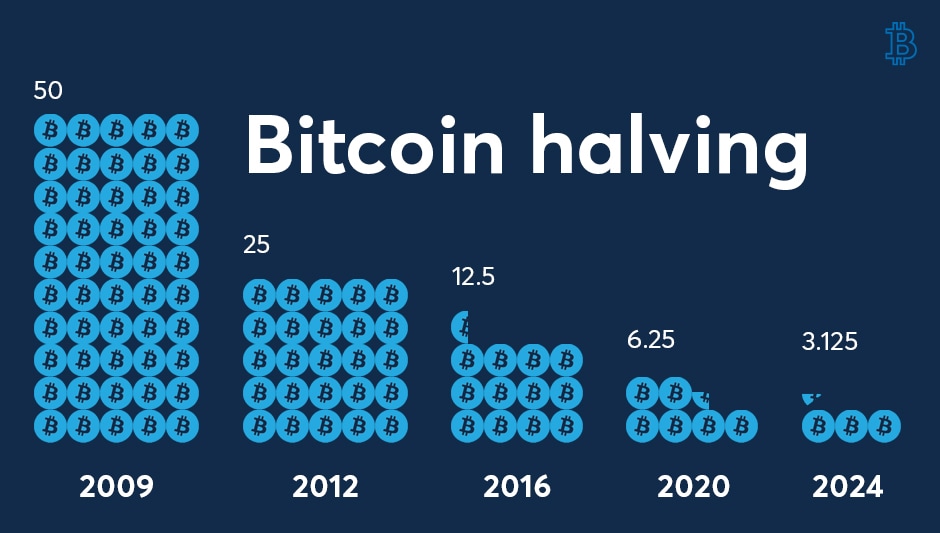
The most recent halving happened in April 2024, which reduced new supply and was a major input into the 2024–25 bull market. But halving is a mechanical supply change — it doesn’t guarantee permanent price increases. Market structure (ETF flows, macro liquidity, sentiment) determines whether reduced issuance translates to higher prices.
So, the “4-year cycle” is real as a rhythm, but it’s noisy. Halving can set the stage, but the actors (institutions, retail, regulators) still decide the plot.
Cryptocurrencies’ Regulation: the double-edged sword
Regulatory action is among the biggest immediate drivers of price. Two points matter:
Clarity = institutional inflows. When regulators approve clear, custody-safe products (for example, the SEC’s approval of spot Bitcoin ETPs in January 2024), institutional participation jumped — and that was a major source of the 2024–25 rally. Institutional access can reduce volatility over the long run but can also concentrate flows (and withdrawals).
Crackdowns = rapid exits. Conversely, unexpected enforcement actions, exchange restrictions, or hostile policy shifts (bans, leverage limits, custody bans) can trigger immediate selling. For the everyday investor, the lesson is simple: political and regulatory risk isn’t “background noise” for crypto — it’s front-and-center.
Potential Security Risk: is quantum computing an existential threat to Bitcoin and Blockchain Authentication?
Short answer: not today, but it’s a plausible future risk that deserves attention.Longer answer:
Bitcoin uses elliptic curve digital signatures (ECDSA) for private/public key cryptography. A mature, large-scale quantum computer running Shor’s algorithm could, in theory, derive private keys from public keys and thus steal funds if those keys have been exposed in transactions. However:
Practical quantum threat remains a matter of years, not days. Current quantum hardware has not reached the scale and error correction needed to crack ECDSA on widely used key sizes. Research institutions and companies are working on mitigation and post-quantum options.
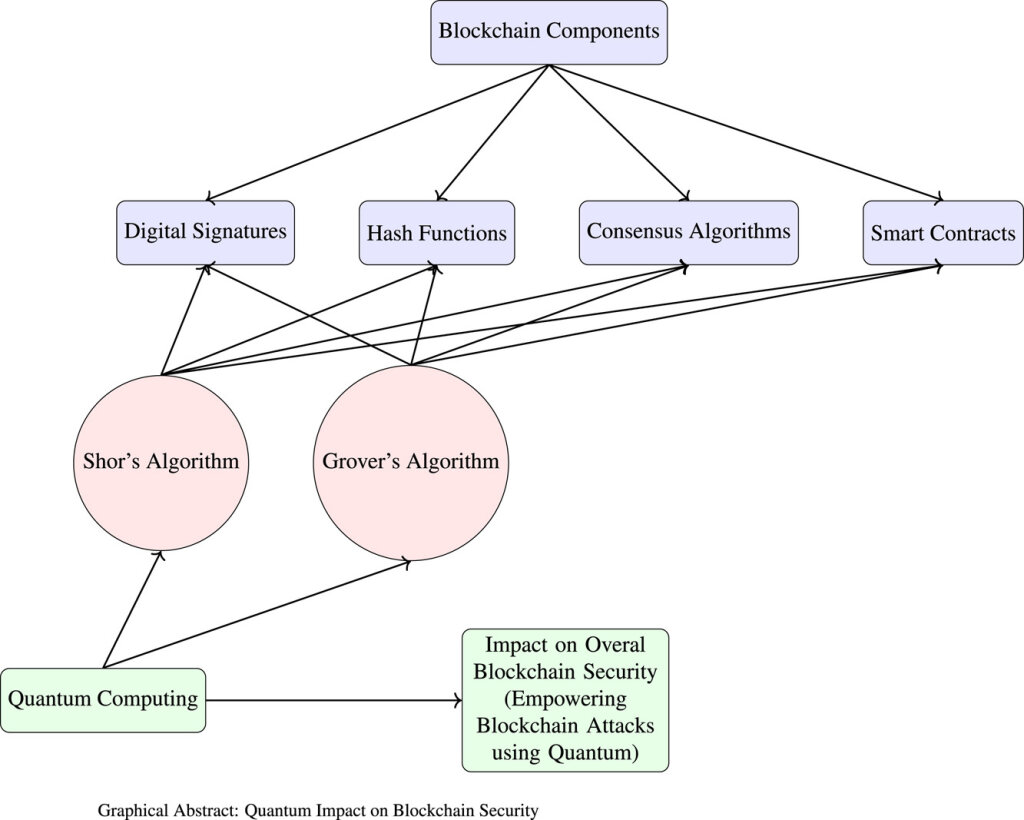
Mitigations exist. Wallets that never reuse addresses, network-level upgrades to post-quantum cryptography, and industry workarounds could reduce risk — but these require coordination and technical upgrades across the ecosystem. Treat quantum as a medium-term strategic risk, not an immediate reason to panic.
Why the Feb 6 Bitcoin Crash likely happened — A deeper dive into the Challenges Facing Cryptocurrencies in Early 2026
Multiple interacting factors explain sudden crashes:
Macro risk-off. Weak labor or economic data, or contagion from tech sector sell-offs, lowers risk appetite. Crypto, often treated as a risk asset, gets sold.
ETF flows and institutional behavior. Reports of large ETF outflows earlier in 2026 put pressure on price — funds that buy or sell large amounts of Bitcoin can move markets. Reuters flagged significant withdrawals from US spot-EFT-linked flows in January.
Liquidations and leverage. When price moves down, leveraged positions are liquidated, which forces more selling into thinner markets. This creates a feedback loop that amplifies the fall.
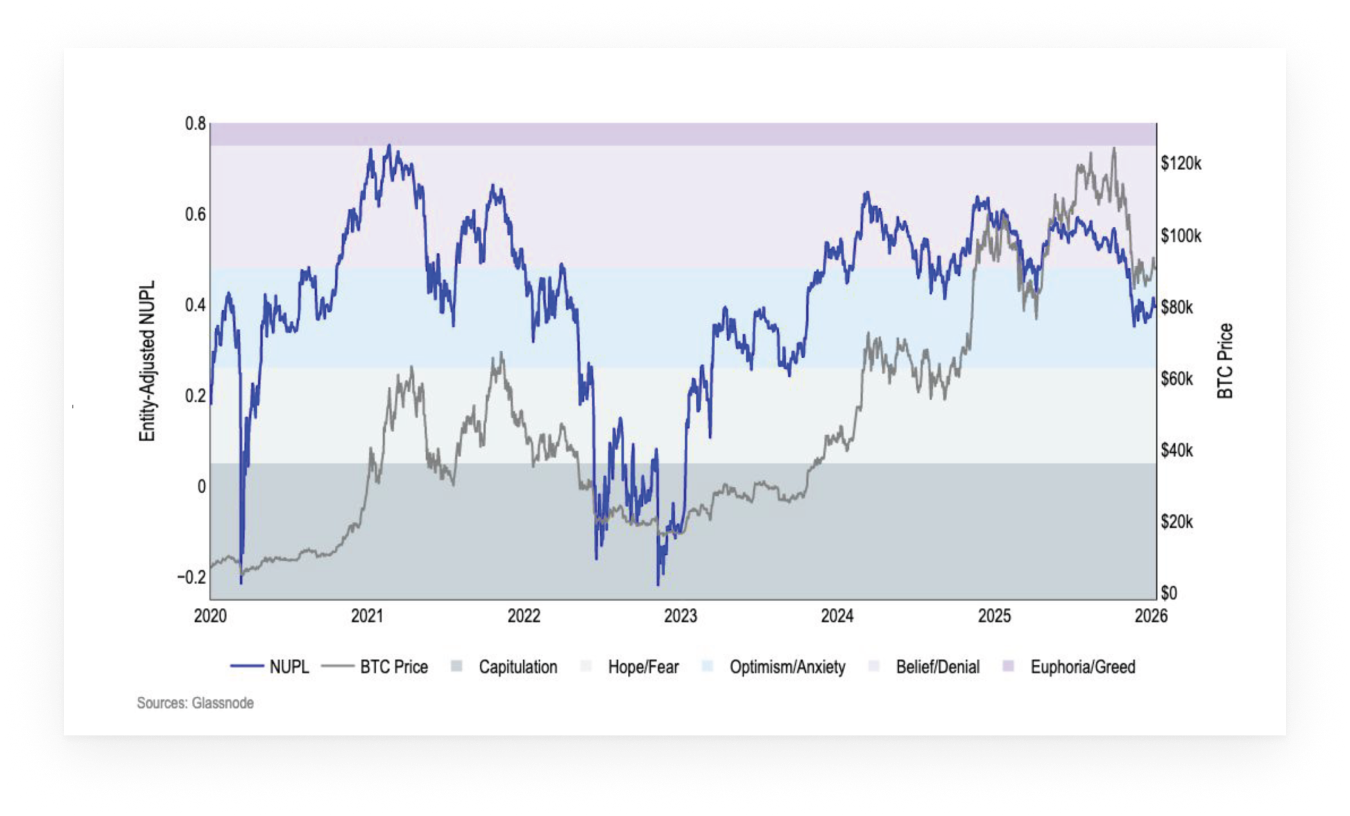
Sentiment reversal and FOMO unwind. When the crowd starts to doubt the narrative, the “fear of missing out” becomes “fear of losing more,” and exits accelerate.
These factors rarely act alone. The market is a choreography of many players; when several hit the exit at once, the move can be sharp.
A Historical Perspective on Crypto Volatility — how wild is “wild”?
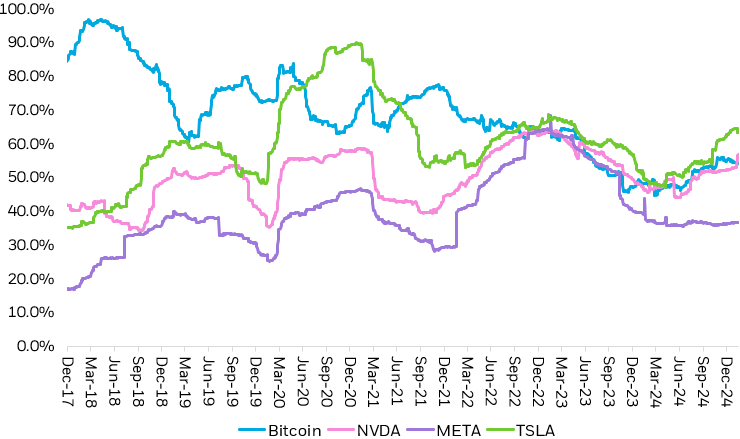
Bitcoin’s historical volatility exceeds many traditional assets on average — though that gap has narrowed in some periods as institutional participation grew. For example, multi-year realized volatility figures often show Bitcoin well above gold and global equities, though short-term patches can be calmer.

Several analytics providers (Glassnode, CoinMetrics, The Block) document how realized and implied volatility ebb and flow with cycles, ETF flows, and macro regimes.
The practical takeaway: volatility is intrinsic to the asset; if you can’t sleep through 30–50% swings, this probably isn’t for you.
Potential Benefits of “Buying the Dip”: why people still buy Bitcoin in 2026
Portfolio diversification (for some)
. Bitcoin’s historical correlation with traditional assets varies; during certain periods it has behaved independently, giving potential diversification value.
Inflation hedge narrative. Some investors buy BTC as a scarce digital asset that might hold value if fiat currencies weaken. This is a narrative, not a guarantee.
Institutional infrastructure. Better custody, ETFs, and corporate treasury allocations increase legitimacy and lower logistical barriers to entry.
If you’re risk-averse or saving for a house, retirement, or an emergency fund, this is not the place to chase fast returns.
Inherent Risks of Buying Cryptocurrencies — a checklist for 2026 and beyond
Full loss risk.
Exchanges can fail; private keys can be stolen or lost; prices can go to zero in extreme scenarios. Treat capital as at-risk.
Regulatory shock. Laws and enforcement can change access overnight in some jurisdictions.
Technological threats (quantum, protocol bugs). Low-probability but high-impact possibilities.
Behavioral risk. Chasing rallies, using excessive leverage, or buying from FOMO are common paths to ruin.
So — should you “buy the dip”?
Here’s a practical decision framework, not financial advice:
Define your allocation cap before you buy. Decide the percentage of your net investable assets that you can afford to lose. For most non-professional investors, that number is small (1–5%), not 30–50%.
Decide your time horizon. Are you experimenting for curiosity (short-term), or are you prepared to hold for 5–10 years? Long horizons tolerate volatility; short horizons don’t.
Avoid leverage unless you are a pro. Leverage maximizes gains and losses; it’s the fastest way to get wiped out.
Use secure custody and basic security hygiene. Prefer regulated custodians or hardware wallets for amounts you intend to hold long term.
Rebalance, don’t gamble. If you buy the dip, think about rebalancing rules (e.g., buy/downscale when allocation drops, sell/take profits when allocation grows), not market timing.
In short: buying the dip is reasonable only inside a disciplined allocation and security plan. If you can’t afford to lose the money, don’t “buy the dip.” Treat crypto as highly speculative.
Imagine the Future — upside and downside scenarios
Bull case:
Continued institutional adoption, ETF inflows, adoption as a treasury or store-of-value wedge, improved custody, and coordinated tech upgrades keep demand elevated. Prices could revisit prior highs or more as narratives and flows align.
Bear case: Large regulatory crackdowns, systemic exchange failures, a major technical exploit, or coordinated deleveraging puncture the market — driving prolonged bear markets and heavy losses. The #SBF (Sam Bankman-Fried) FTX collapse taught investors that exchange governance risks matter.
Both outcomes are plausible; betting on the bull without acknowledging the bear is wishful thinking.
Practical Takeaway for Cryptocurrency Investment following the Feb 2026 Bitcoin Crash: what I’d tell a friend (plainly)
Treat Bitcoin and other crypto as speculative, high-risk investments
— allocate only what you can afford to lose.
If you have a long time horizon, a small, measured allocation and strong custody/security practices can be justified.
Don’t use leverage. Leverage plus crypto volatility is a high-probability path to ruin.
Learn the basics: how custody works, what an ETF does, how halving affects supply, and why regulation matters. Knowledge reduces surprise.
For most people focused on retirement or wealth preservation, prioritize diversified, income-producing, and lower-volatility assets first; then consider a small allocation to crypto for asymmetric upside.
Portfolio Allocation: How an Ordinary Investor Might Think About Bitcoin
This is where theory meets reality.
Bitcoin should not be treated as a core holding for most people. It is best understood as speculative exposure — similar to venture capital, early-stage tech, or commodities.
A Practical Allocation Framework
You can visualize this as layers:
Core Portfolio (70–90%)
Cash & cash equivalents
Bonds / fixed income
Broad equity funds
Real assets (real estate, infrastructure)
Growth & Thematic Exposure (5–20%)
Sector ETFs
Emerging markets
Technology themes
Speculative / Asymmetric Bets (0–5%)
Bitcoin
Other crypto assets
Early-stage or frontier investments
Bitcoin belongs in the speculative layer, not the foundation.
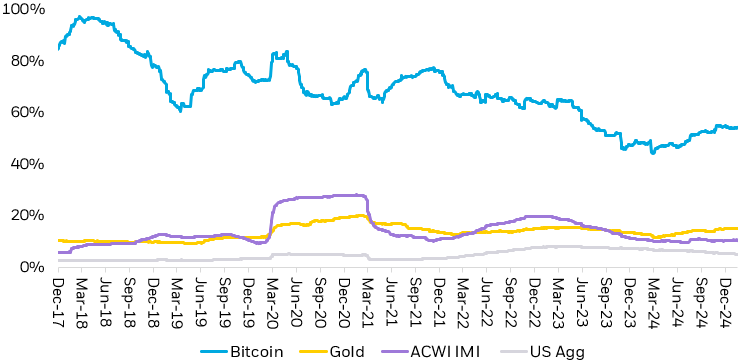
Key Rules for Allocation
Decide the allocation before you buy
Never use leverage
Assume the allocation could go to zero
Rebalance periodically — don’t chase price
Secure custody matters as much as price
If Bitcoin succeeds, a small allocation can matter.
If it fails, a small allocation won’t ruin you.
That asymmetry is the only rational justification for holding it.
Should You Buy the Feb 2026 Cryptocurrency Dip?
Buying the dip is not a strategy — it is a tactic.
It only makes sense if:
Your allocation is already defined
You are prepared for further declines
You have a multi-year horizon
You can emotionally tolerate volatility
If you need certainty, income, or stability, Bitcoin is the wrong tool.
Key Points:
Bitcoin is not a scam, a savior, or a stable investment. It is an evolving experiment in money, trust, and technology — one that exposes investors to both extraordinary upside and extraordinary risk.
For ordinary investors, wisdom lies not in certainty, but in proportion.
Own it carefully, or not at all.
Respect its volatility.
Never confuse belief with safety.
In finance, survival matters more than conviction.
Final Thought on the Feb 2026 Bitcoin Crash — the honest truth about Crypto and particularly, Bitcoin, BTC
Bitcoin isn’t a pure scam, nor is it a guaranteed growth machine. It’s an experiment
—one with enormous social, economic, and technological implications. It behaves sometimes like a speculative commodity, sometimes like an emergent store of value, and sometimes like a crowded trade that can reverse violently. That ambiguity is the source of both its appeal and its danger.
If you’re intrigued, learn, start small, secure your keys, and keep expectations realistic. If you’re risk-averse or saving for a house, retirement, or an emergency fund, this is not the place to chase fast returns. The universe of finance rewards humility as much as it does courage.
References (sources I used for facts and figures)
- Reuters — “Bitcoin claws up to $65,000, set for largest weekly drop since late 2022.”
- Economic Times — coverage of the Feb 6 intraday slide and rebound.
- Barron’s — “Bitcoin, XRP, Ether Rebound from Lows.”
- LSEG / FTSE Russell — Bitcoin halving (April 2024).
- CME Group — discussion of the 2024 halving.
- SEC statement on approval of spot Bitcoin ETPs (Jan 10, 2024).
- Congressional Research Service / ETFDB on Bitcoin ETP approvals.
- U.S. DOJ press release — Sam Bankman-Fried sentencing (Mar 28, 2024).
- The Guardian — background on SBF trial and FTX collapse.
- PostQuantum / industry pieces on quantum risks to crypto.
- ScienceDirect papers on quantum threats and blockchain security.
- – Glassnode & Coinbase Institutional insights on 2026 market structure and volatility.
- – iShares / Fidelity / The Block — volatility and realized volatility measures.
- – CoinDesk — onchain metric coverage identifying bottoms.
This article has been written with the help of A.I. for topic research and formulation.
More from Mania Africa:
 Unveiling Complex Answers: ChatGPT’s In-Depth Responses to the Toughest Questions It Has Been Asked So Far
  The Ultimate Server-Side Caching Guide for WordPress: Redis, Varnish, and Cloudflare Enterprise Explained
  Maximize ROI for your SMB Website with Cloudways’ CPU-Optimized Servers + Lightning Stack: Scale for Long-term Growth at an Affordable Price