


Contents
- 0.1 RelatedPosts
- 0.2 All You Need to Know About Seedance 2.0: ByteDance’s Next-Gen AI Video Model
- 0.3 Why Users Are Rallying to #Keep4o: The Social Backlash Against OpenAI Retiring ChatGPT 4o
- 0.4 To the Moon?: Is Bitcoin a Balloon in Space or a Building on a Solid Rock Foundation – A Practical, Hype-Free Look at the Feb 2026 Bitcoin Crash
- 1 The Deceptive Appeal of Free Chrome Extensions: A Data Privacy Risk Amplified
- 2 Exposed: PCMag Uncovers Widespread AI Chat Data Theft by ‘Free’ VPN Chrome Extensions – A Technical Deep Dive
- 3 The Grave Risks of AI Chat Data Theft for Users: Beyond Simple Privacy
- 4 User Behavior, Permissions, and the Fight for Digital Privacy: A Call for Greater Scrutiny
- 5 Google’s Responsibility and the Need for Stronger Regulation in Browser Extension Security: A Platform Imperative
- 6 Safeguard Your Privacy: Essential Steps to Protect Against Malicious Chrome Extensions – Advanced Strategies
- 7 Protecting Your AI Chat Privacy in a Vulnerable, Rapidly-Evolving Digital World: The Path Forward
Chrome browser extensions can supercharge your browsing experience, offering a wealth of functionalities. However, a dark side often lurks beneath the surface.
Recent revelations expose a sinister trend: seemingly harmless extensions secretly harvesting sensitive data, including your private AI chat logs. This article delves into the alarming implications of such practices, highlighting a critical case study by PCMag that uncovered Chrome extensions illicitly collecting users’ AI interactions, and provides a deeper dive into prevention and protection.
When you install an extension, you typically grant it permissions that can include broad access to your browsing activity, data on the websites you visit, and even the ability to read and modify content on those sites.
The Deceptive Appeal of Free Chrome Extensions: A Data Privacy Risk Amplified
The Google Chrome Web Store boasts thousands of extensions designed to boost productivity, enhance security, or streamline online activities. Many users are drawn to these free tools without fully considering the inherent risks.
The promise of enhanced functionality often overshadows the potential for severe data privacy violations.
Related: Unveiling TikTok’s Alleged Anti-Trump Censorship: Everything Users Need to Know
Remember the old saying: “If you’re not paying for the product, you are the product.” This rings especially true for free browser extensions, where monetization frequently occurs through the collection and sale of user data.

Beyond mere advertising, this data can be leveraged for more sinister purposes, including corporate espionage, targeted phishing campaigns, or even to build comprehensive profiles for identity theft.
The low barrier to entry for #BrowserExtension development, coupled with less stringent review processes (compared to native applications), makes them a fertile ground for malicious actors.
Exposed: PCMag Uncovers Widespread AI Chat Data Theft by ‘Free’ VPN Chrome Extensions – A Technical Deep Dive
A recent exposé by PCMag, based on research from cybersecurity firm Koi, revealed that several popular #GoogleChrome and Edge browser extensions were secretly collecting entire conversation logs from users’ interactions with major AI chatbots. These extensions, often masquerading as free proxies or VPNs, executed custom scripts to record and transmit full conversations whenever a user visited an AI chatbot site. Data harvesting and exfiltration was enabled by default, with no user-facing option to disable it.
Related: The Ultimate Guide to VPNs: Everything You Need to Know for Secure and Flexible Web Browsing
Malicious Chrome Extensions Identified in the Report
The report specifically identified Urban VPN Proxy, an extension with over 7 million installs, as a primary culprit. It targeted conversations across ten prominent AI platforms, including ChatGPT, Claude, Gemini, Microsoft Copilot, Perplexity, DeepSeek, Grok (xAI), and Meta AI. Other flagged extensions, including 1ClickVPN Proxy, Urban Browser Guard, and Urban Ad Blocker, collectively accounted for over 8 million users across both web stores.
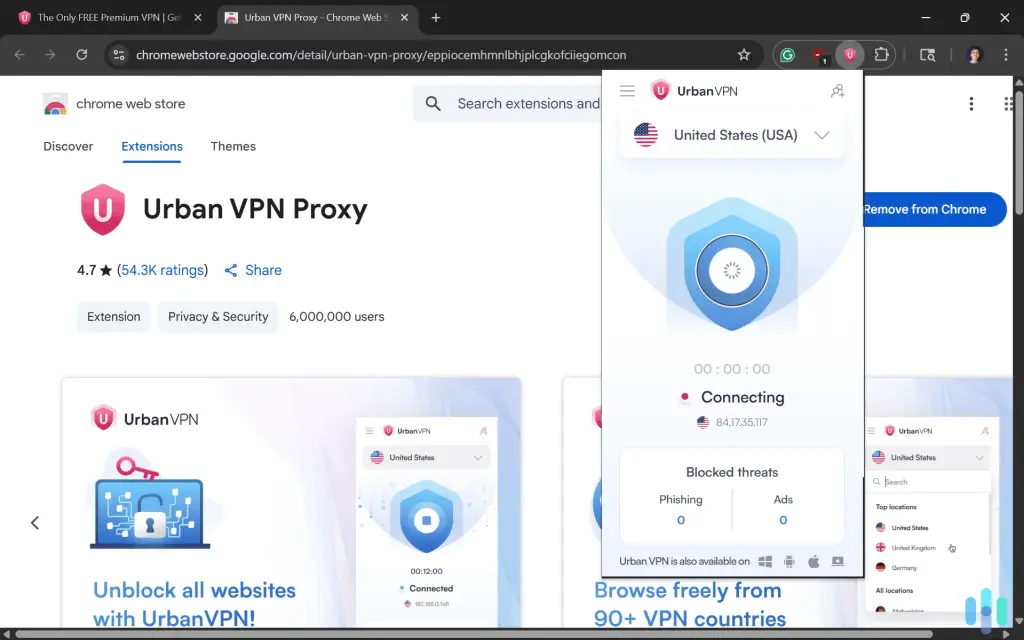
These #ChromeExtensions, while ostensibly offering enhancements like summarization or streamlined interaction, were, in reality, engaging in unauthorized and extensive AI chat data collection. Google has since removed these extensions from the Chrome Web Store, but the incident serves as a critical warning.
The revelation of Chrome extensions collecting users’ AI chat logs serves as a stark reminder of the pervasive vulnerabilities inherent in our digital landscape.
How Malicious Extensions Harvest Your AI Chat Data: The Mechanics of Compromise
The methods employed by these malicious Chrome extensions to collect data are often insidious and exploit the powerful permissions users grant. When you install an extension, you typically grant it permissions that can include broad access to your browsing activity, data on the websites you visit, and even the ability to read and modify content on those sites. This extensive level of access allows malicious extensions to intercept and log AI chat interactions seamlessly through several vectors:
- DOM Manipulation and Event Listeners: Extensions can inject JavaScript directly into a chatbot’s webpage. This script can then attach event listeners to input fields (to capture your queries) and monitor changes to the Document Object Model (DOM) to extract the AI’s responses as they appear on the screen.
- Network Request Interception: With sufficient permissions, an extension can intercept and even modify network requests and responses. This allows them to capture the raw data payloads sent to and received from AI chatbot APIs, bypassing the browser’s rendering entirely. This method is particularly potent as it captures data before it’s even displayed to the user.
- Local Storage and Session Hijacking: While less direct for chat logs, malicious extensions can access and exfiltrate data stored in your browser’s local storage or session storage, which might contain authentication tokens or user preferences that could be used for further exploitation.
- Cookie Exfiltration: By accessing cookies, an extension could potentially gain access to session identifiers, leading to session hijacking if those cookies are not properly secured.
For example, when you engage with an AI chatbot such as ChatGPT, the injected script can capture both your input and the AI model’s output, effectively recording your entire conversation. This sensitive AI chat data is then sent to servers controlled by the extension developers, who may monetize it by selling it to advertisers, leveraging it for competitive intelligence, or using it for other nefarious purposes, significantly compromising your AI chat privacy.
Related: How to Use ChatGPT: A Step-by-Step Guide
The Grave Risks of AI Chat Data Theft for Users: Beyond Simple Privacy
The theft of AI chat logs and other sensitive browsing data poses several grave risks to users, extending far beyond simple privacy violations:
- Privacy Violations: Exposure of personal conversations can lead to significant embarrassment, reputational damage, or even blackmail. This includes sensitive personal opinions, private struggles, or confidential discussions.
- Identity Theft & Financial Fraud: Captured sensitive information, such as personal details, financial data, or even answers to security questions shared in chats, can be exploited for sophisticated identity theft schemes or direct financial fraud.
- Data Monetization & Targeted Manipulation: Your collected data becomes a commodity, sold to third parties without your consent. This can lead to highly targeted advertising (microtargeting), manipulative political campaigns, or even “dark patterns” designed to trick users into specific actions.
- Misuse of Information for Corporate Espionage: For businesses, AI chats often contain highly sensitive information like draft contracts, strategic plans, proprietary algorithms, API keys, or even confidential source code. The exfiltration of such data can lead to severe competitive disadvantages, intellectual property theft, and account takeovers, potentially crippling an organization.
- Compromised Digital Footprint: The cumulative effect of such data theft can lead to a severely compromised digital footprint, making users vulnerable to a continuous stream of attacks and unsolicited intrusions.
What’s even more scary is that the data collected isn’t just applicable for marketing and advertising purposes, but could also be used for large-scale corporate espionage, (by rogue governments) for censorship and silencing dissent, or even to create ‘Dark AI‘ models. Beyond the obvious harmful effects of the existence of such models—and the inexcusable breach of privacy the chrome extensions have already done—there could be far-reaching data and internet security consequences.

An AI built to hack and cause menace could not only throw off international markets or cripple crucial resource systems, but it could also alter (or trigger) harmful behavior—such as the increased use of AI chatbot data to not only conjure new models, but gradually ‘enshittify’ the internet and the content therein. Such notions are clearly stipulated as seen in the idea behind “the dead internet theory”.
Related: What is Micro-Targeting and How is it Used in Advertising
User Behavior, Permissions, and the Fight for Digital Privacy: A Call for Greater Scrutiny
One of the primary challenges in addressing this widespread data theft is user behavior regarding extension permissions. Many users click through permission requests without fully understanding the extensive access they are granting. A common scenario involves users needing a tool for a specific function, leading them to overlook the potential risks associated with broad, unnecessary permissions. The language used in permission requests can often be vague or technical, further exacerbating this issue.
Related: World’s Biggest Data Breach? Personally Identifiable Information of 2.9 Billion Exposed
Why Informed Consent is Crucial for Extension Permissions: Redefining User Responsibility
For both developers and users, informed consent is paramount. Users must be educated about the full implications of granting permissions and the potential for misuse of their data. This includes:
- Understanding “Host Permissions”: Explaining what “read and change all your data on the websites you visit” truly means.
- Contextualizing Permissions: Providing examples of how specific permissions can be abused.
- Promoting Critical Thinking: Encouraging users to question *why* an extension needs certain permissions for its stated functionality.
Developers, in turn, bear a significant responsibility to be transparent about their data handling practices. This includes clear, concise privacy policies that are easily accessible and understandable, not just legal jargon. Prioritizing ethical data collection and usage is essential to foster trust within the user community and enhance browser extension security.
Related: Will the EU’s AI Act Stifle the Competitiveness of Europe in the AI Race?
Google’s Responsibility and the Need for Stronger Regulation in Browser Extension Security: A Platform Imperative
As the operators of the Chrome Web Store, Google is in a unique and powerful position to safeguard user data. However, the sheer volume of available extensions makes rigorous monitoring a considerable challenge. Google must significantly enhance its review processes and implement stricter guidelines for extensions that request access to sensitive data. Specific measures could include:
- Automated Code Analysis: Implementing more sophisticated static and dynamic code analysis to detect suspicious patterns or hidden data exfiltration mechanisms.
- Stricter Permission Scoping: Enforcing a principle of least privilege, forcing developers to request only the absolute minimum permissions required for an extension’s core functionality.
- Clearer User Warnings: Providing more prominent and understandable warnings to users when extensions request highly sensitive permissions.
- Regular Audits of Popular Extensions: Proactively auditing top-downloaded or high-permission extensions for compliance and malicious behavior.
Furthermore, regulatory bodies must intensify their efforts to protect consumers from data breaches and unauthorized data collection. Legislation similar to the General Data Protection Regulation (GDPR) in Europe, the California Consumer Privacy Act (CCPA), and emerging AI-specific regulations could provide a robust framework for holding developers and platform providers accountable.

These regulations should mandate transparency, data minimization, and severe penalties for non-compliance, ensuring users’ digital privacy rights are protected globally and improving overall browser extension security.
Related: The Hidden Human Cost of AI: The Struggle of Kenya’s Data Workforce
Safeguard Your Privacy: Essential Steps to Protect Against Malicious Chrome Extensions – Advanced Strategies
Given the significant risks associated with Chrome extensions, users must take proactive and informed measures to protect their data and maintain AI chat privacy:
- Evaluate Permissions Meticulously: Before installing any browser extension—or AI browser, thoroughly review the permissions it requests. If an extension asks for access beyond what is strictly necessary for its stated functionality, *do not install it*. For instance, a simple screenshot tool doesn’t need access to “all data on all websites you visit.”
- Research Extensions Rigorously & Diversify Sources: Look for extensive, recent reviews of the extension you are about to install (and the companies behind them)—preferably it should have high ratings, and active developer support. Cross-reference information about the developer keenly and understand that popularity—number of downloads/installs—isn’t always the same as quality. Consider open-source alternatives when possible also, as their code can be (and is often) scrutinized by the community contributing to the project. Be wary of extensions from unknown developers, especially those with vague descriptions or very few reviews or likes. Again, there’s a caveat: the number of reviews or likes doesn’t always translate to actual quality, privacy, or security provisions.
- Conduct Regular Audits with Developer Tools: Periodically review all installed extensions. Remove any that are no longer in active use, seem suspicious, or have questionable permission requests. Advanced Tip: Use your browser’s developer tools (F12) to monitor network requests initiated by extensions. Look for unusual data transmissions to unfamiliar domains when using AI chat services.
- Utilize Comprehensive Security Tools & Browser Sandboxing: Employ reputable browser security tools, antivirus software, and privacy-focused browsers (e.g., Brave, Firefox Focus) to detect and block harmful extensions and scripts. For highly sensitive AI interactions, consider using a dedicated, sandboxed browser instance (e.g., via a virtual machine or a separate browser profile with minimal extensions) to isolate potential threats.
- Stay Informed and Vigilant: Keep up-to-date with the latest tech news and security advisories regarding data privacy and emerging threats associated with browser extensions and AI platforms. Follow reputable cybersecurity news outlets such as The Geekline Feed 🙂
- Implement a Content Security Policy (CSP) (for developers/advanced users): If you operate your own web services, implementing a strict Content Security Policy can mitigate some risks by controlling which resources the browser is allowed to load and execute.
- Use Privacy-First AI Tools: Always use AI tools that are keen to ensure chat privacy, and end-to-end encryption of data (starting from AI prompt generation, all the way to AI response delivery). PS: We built such a tool for WordPress Automation: The Gemini MCP Tools Plugin, which WordPress devs and site owners can use to securely interact with their site administration AI models via the command-line interface (CLI). You can check it out here 😉
Protecting Your AI Chat Privacy in a Vulnerable, Rapidly-Evolving Digital World: The Path Forward
The revelation of Chrome extensions collecting users’ AI chat logs serves as a stark reminder of the pervasive vulnerabilities inherent in our digital landscape.
“If you’re not paying for the product, you are the product.”
As reliance on AI tools for both personal and professional interactions grows, the need for heightened vigilance has never been greater. This battle for digital privacy requires a multi-faceted approach involving informed users, ethical developers, and proactive platform providers and regulators.
Related: The Importance of Keeping It Private and Why You Should Always Keep Your Data Private
By understanding the risks, advocating for ethical data practices, and consistently employing advanced protective measures, users can significantly safeguard their privacy and digital security.
PS: You can watch ‘The Great Hack‘ below. It’s a powerful movie on why data privacy is not only important but also why it is crucial for Tech companies to ensure all-round data privacy protection.

This case of malicious extensions powerfully underscores the critical importance of transparency, informed consent, robust regulatory oversight, and continuous user education in protecting sensitive AI chat data—in our increasingly interconnected and AI-driven world. The path forward demands a collaborative effort to build a more secure and trustworthy digital ecosystem.
This article has been written with the help of AI for topic research and formulation.
More from Mania Africa:
 Free and Paid Ways to Secure WordPress: Essential Tips for Securing Your WordPress Site
  Mastering Server-Level WordPress Optimizations: Proven Strategies for Blazing-Fast Performance
  Easy and Quick WordPress Optimizations with One-Click and One-Plugin Solutions
  WordPress vs. WP Engine Feud: Should You Move Your Site Away from WP Engine?
  5 Reasons Why Your Website Needs Managed Cloud Hosting (and Why We Think Cloudways is the Best)
  How to Monitor and Maintain a High-Performance WordPress Server (Without the Guesswork)
  The Ultimate Server-Side Caching Guide for WordPress: Redis, Varnish, and Cloudflare Enterprise Explained
  How to Optimize WooCommerce for Speed and Security